Stick pack is the fastest format per ringgit.
A small, single-use stick, 2–15 g: sugar at cafés, 3-in-1 coffee at the office, flavoring in instant noodle packets, travel honey, pharmaceutical samples. Demand is high and packaging margins are tight — that's why stick-pack machines are designed for one goal: the highest number of sticks per minute with the least film per stick.
If you're packaging loose products in small quantities at high volumes, no format beats stick packs on a cost-per-unit basis. If your volume is moderate, a standard bagger may be more flexible — full guide in How to choose a packing machine for an SME.
How it works: Mini layered VFFS
The stick pack machine is a vertical form-fill-seal (VFFS) machine multiplied:
- A roll of film (for example, 300-600 mm) pulled down.
- The vertical cutter divides the film. to 4–10 narrow parallel bands — each band becomes a single rod.
- Each strand forms a tube, filled by Self-service station (small auger for powder, liquid nozzle for coconut milk/honey), sealed crosswise at the top and bottom, then cut.
- All sticks fall into the same envelope — the speed is the speed of one lane multiplied by the number of lanes.
The speed of a typical single lane is 40–60 sticks per minute. A 6-lane machine equals 240–360 sticks per minute. That's why the total stick pack count looks high compared to bag machines: it's not that they're faster, it's that they're multiplied.
Lane count: don't buy more than demand.
The lane is the biggest price driver in the stick pack machine — each lane is a complete filling and sealing station. Do the math first:
| Request | Target | Alley | Total speed |
|---|---|---|---|
| 3,000 per hour | 50 strokes per minute | 1 | 40-60/min |
| 12,000 per hour | 200 stems/min | 4 | 160-240/min |
| 25,000 per hour | 420 strokes/min | 8 | 320-480 per minute |
Use a three-month average demand, not the peak season. An eight-lane machine running four lanes part-time is a cash-flow killer — and not all machines can shut down lanes cleanly (ask; the good ones can).
Product and fillers: powder, liquid, fine granules
- Powder (3-in-1 coffee, flavoring, powdered milk): small auger per channel, accuracy ±11% on weights from 2 to 15 g. Structure is the same as Automatic powder packaging machine but on a mini scale.
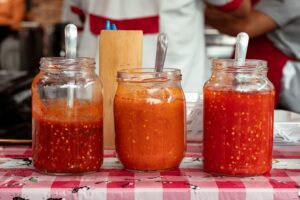
- Liquid and paste (coconut milk, honey, sauce): liquid filling nozzle with a seal that indicates wet products — a different class from powder fillers; clearly identify the product.
- Fine granule (sugar, salt): gravity or mini cups are enough, simplest.
Thin, narrow stick-pack film — the registration on the film must be precise, because a one-millimeter shift on a 40 mm strip means the seal ends up out of place. High-quality machines have a servo-driven film puller for each strip; the basic models rely on a single puller for all — a difference that shows up in the push rate.
Stick Pack Field Lesson
The 3-in-1 coffee tests everything at once.: powder (dust), sugar (hygroscopic), creamer (soft and dense). Testing with your actual blend is not an option — request a test video with your formulation before paying the deposit. For the coffee category, product background in Instant coffee packaging machine.
Wide films are special items. — 400 mm roll stick pack with an 8-pass imprint is not the same as standard bag film. Ensure the local Malaysian film supplier can provide that structure before committing to 8 lanes.
Weight check on the narrow track is difficult. — Regular manual weighing of sticks (every 30 minutes) remains standard practice; an online weight-checking system for stick packs exists but is expensive. Plan manual QC into your workflow from day one.
When a stick pack is not an option
- Bag 20 g and up — that is the area for a single-track VFFS bag or sachet; see Mini sachet bag packaging machine.
- Many SKUs, small volume for each. Changing 8-roll film between SKU designs is time-consuming and wasteful; single-bag machines switch more quickly.
- Preservative-free liquid disinfectant — requires aseptic filling, a completely different class of machine.
- Volume under 5,000 sticks per day — a 1-2 lane machine or a semi-automatic sachet machine is more cost-effective.
Frequently Asked Questions (FAQ)
Can a single stick pack machine handle powders and liquids?
J: You can do it with two charging stations—but it's a major swap (not a 10-minute one). If both volumes are large, two machines are cheaper than one all-in-one machine that's always half-empty.
Is a speed of 300 pieces per minute realistic for a small factory?
J: At 6 lanes × 50 sticks per minute, yes—that's the sweet spot for most local flavor and coffee producers. Make sure the downstream section (casing, QC scale, distribution) keeps up; blockages always occur after the machine, not in the machine.
Is a stick pack suitable for Halal products?
J: The machine does not come with certification — the easy-to-clean SS304 design supports hygiene in food processing facilities, including Halal sites, just like other food machinery classes.
How many lanes for the start?
J: Most plants start with four lanes: enough for a moderate contract, and the machine frame usually supports adding lanes later — confirm this lane expansion with the supplier before buying.
Related pages
Automatic powder packaging machine | Instant coffee packaging machine | Mini sachet bag packaging machine | Price of automatic packaging machines in Malaysia
Specify the product, bag size, and bag target per minute. Get a quote, specifications and delivery timeframe.



 English
 Malay