Bahan pembungkusan termasuk logam, plastik, kaca, seramik, kertas, buluh, cendawan liar, gentian semula jadi, gentian kimia, bahan komposit dan bahan pembungkusan utama yang lain, dan juga termasuk pengikat, hiasan, bahan percetakan dan bahan tambahan lain. Bahan khusus yang akan dipilih bergantung pada permintaan produk, dan isu perlindungan alam sekitar juga mesti dipertimbangkan.
Inovasi dalam bahan pembungkusan termasuk: bahan pembungkus pengacuan pulpa untuk penebat haba, kalis kejutan, kalis hentaman dan mudah rosak;
Dalam reka bentuk, berusaha untuk mengurangkan penggunaan bahan yang sukar terurai pada peringkat akhir dalam pembungkusan, dan cuba gunakan bahan yang ringan, bersaiz kecil, mudah dihancurkan atau diratakan, dan mudah diasingkan.
Jenis Bahan Pembungkusan
Bahan pembungkusan kertas: kertas sarang lebah untuk kertas pembungkusan, kertas beg kertas, kertas pembungkus bahan pengering, papan kertas sarang lebah, papan kertas industri kraf, teras kertas sarang lebah;
Bahan pembungkusan plastik: Pita pengikat PP, pita pengikat PET, filem pemedih mata, filem pembalut, pita pengedap, filem pengecutan haba, filem plastik, papan berongga;
Bahan pembungkusan lembut komposit: pembungkusan lembut, filem alumin, dawai teras besi, filem komposit kerajang aluminium, kertas alumin vakum, filem komposit, kertas komposit, BOPP;
Bahan pembungkusan logam: kerajang aluminium plat timah, gelung tong, tali pinggang keluli, gesper pengikat, aluminium lepuh, kerajang aluminium PTP, plat aluminium, gesper keluli;
Bahan pembungkusan seramik: botol seramik, silinder seramik, balang seramik, periuk seramik;
Bahan pembungkusan kaca: botol kaca, balang kaca, kotak kaca;
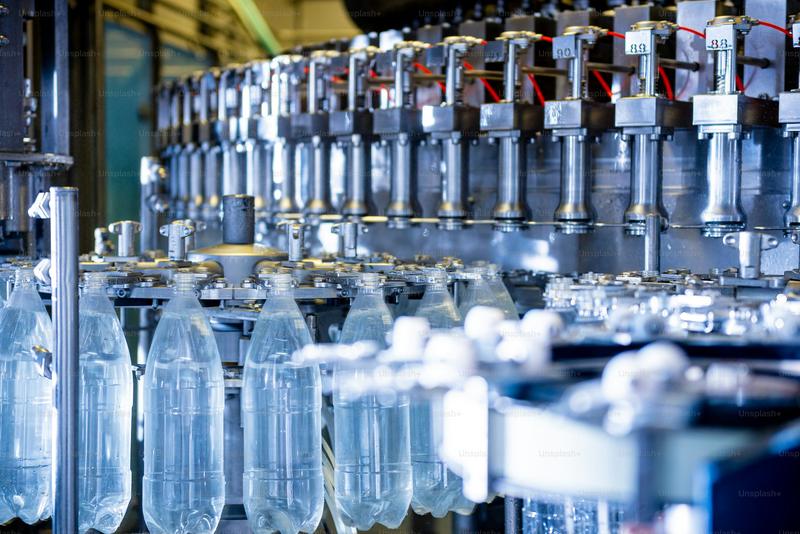
Bahan pembungkusan kayu: pembungkusan yang diperbuat daripada produk kayu dan papan kayu tiruan (seperti papan lapis, papan gentian), seperti kotak kayu, tong kayu, kotak kayu, papan lapis kayu, kotak papan gentian, kotak papan lapis dan palet kayu, dsb.;
Bahan pembungkusan/bahan tambahan lain:
Bahan setem panas: bahan pengecap panas, filem laser, kertas pengecap panas aluminium elektrokimia, filem pengecap panas, filem pengecap panas, kerajang pengecap panas, kerajang pengecap panas, kerajang warna;
Pelekat, salutan: pelekat pelekat, pelekat komposit, penambah, pelekat kanji, gam pengedap, lateks, damar, pelekat sendiri;
Pembungkusan bahan tambahan: mesin sarung tangan penutup botol, acuan, gasket, pemegang, muncung pelapik, penutup pengedap, filem pembungkusan.
Pembungkusan Kotak Untuk Produk Kosmetik
Tinju merujuk kepada kotak kertas lipat atau kotak kertas beralun mikro yang diperbuat daripada dua bahan: kadbod dan papan kertas beralun mikro. Bahan kotak pembungkusan boleh dibahagikan kepada dua kategori: satu kertas muka dan satu lagi kertas beralun. Kertas yang biasa digunakan untuk kotak pembungkusan termasuk tembaga kelabu, tembaga tunggal, tembaga putih, kad cantik, kad perak, kad emas, kad platinum, kad laser, dll.
“White background white board” refers to: white copper and single copper. The common point between white copper and single copper is that both sides are white. The difference is: “white copper” is smooth on one side and not smooth on the other side. In layman’s terms, the front side can be printed, but the back side cannot be printed; “single copper” has coated surfaces on both sides, and both sides can be printed. “Gray background gray board” has this kind of paper, but it is not used on packaging boxes; “gray background white board” is the so-called “gray copper paper”, that is, the front side is white and can be printed, and the back side is gray and cannot be printed. Generally, white card is also called “white background white board” paper, which is the abbreviation for general quotation (except special white cards, such as platinum card and silver card).

Kadbod putih, kadbod hitam
Kadbod putih mempunyai pelbagai aplikasi, dan biasanya digunakan dalam pembungkusan kosmetik, pembungkusan farmaseutikal, pembungkusan rokok, pembungkusan wain dan pembungkusan makanan. Ciri-cirinya ialah bahan kertas keseluruhannya kukuh dan tebal, keputihannya tinggi, permukaan kertasnya licin tanpa bintik-bintik kasar, mudah dicetak, penerimaan dakwatnya bagus, dan kekilatannya tinggi. Kami biasanya memilih bahan kertas ini dahulu apabila mencetak beg tangan kosmetik. Sebab untuk memilih bahan kertas ini ialah: pertama, kertas tidak mudah kehilangan dakwat semasa mencetak, kedua, kertas jenis ini mempunyai keliatan yang baik, rintangan lipatan yang tinggi dan tidak mudah koyak. Ketiga, kertas mempunyai ketumpatan yang tinggi. Sebagai tambahan kepada kelebihan ini, kadbod putih dan kadbod hitam boleh sesuai untuk pelbagai proses rawatan permukaan. Proses pengeluaran biasa termasuk laminasi, varnishing, emas panas/perak panas, biru panas, merah, emas hijau, cembung, UV, timbul, dsb. Apabila membuat kotak topeng, kadbod putih tinggi juga boleh dipotong mati ke dalam pelbagai struktur kotak yang diperlukan untuk mencapai kesan pembungkusan yang dikehendaki oleh pelanggan.
Kadbod emas, kadbod perak, kad emas laser dan kadbod emas pelbagai warna
Kadbod emas dan perak boleh digunakan dengan lebih kerap dalam aspek pembungkusan topeng, dan terdapat banyak pilihan dalam pembungkusan dalaman kosmetik, kotak pembungkusan luar dan pembungkusan peralatan mandian harian. Seperti pembungkusan produk ubat gigi, produk penjagaan kesihatan, ubat dan pembungkusan kotak hadiah. Ciri terbesar kadbod emas dan perak ialah ia kelihatan lebih mewah, indah dan berkelas secara visual. Kadbod emas dan perak adalah kertas khas. Ia dibuat dengan melaminakan lapisan kerajang aluminium emas dan perak pada kadbod putih. Percetakan kadbod bercetak emas sedikit lebih rumit kerana bahannya. Dakwat percetakan cepat kering diperlukan semasa mencetak, dan kerana permukaan kadbod emas dan perak mudah tercalar, perlindungan laminasi diperlukan dalam proses seterusnya. Selepas laminasi, proses timbul permukaan, embossing, setem panas, UV dan lain-lain dilakukan. Jika kadbod emas dan perak digunakan, kos pengeluaran akan lebih tinggi sedikit daripada kadbod putih biasa. Walau bagaimanapun, untuk meningkatkan jualan dan estetika produk, menggunakan kadbod emas dan perak atau memilih warna lain kadbod emas mungkin menjadi pilihan!
Kertas kraft dan kertas khas
Kelebihan kertas kraf adalah keliatan, rintangan koyakan dan kalis air yang baik, tetapi permukaannya longgar dan sedikit kasar. Kebanyakan cetakan adalah hitam tunggal. Jika permukaan memerlukan cetakan 4 warna atau cetakan warna spot, kesan cetakan mungkin sedikit lebih teruk daripada cetakan kertas lain kerana kertas itu sendiri berwarna kuning. Dalam pemprosesan pasca, jika setem panas dan UV tidak dilakukan tanpa laminasi, bahagian setem panas akan menjadi tidak lengkap atau tidak boleh dicop panas kerana permukaan kertas itu sendiri tidak licin dan halus. Proses rawatan permukaan selepas laminasi adalah lebih baik.
Kotak kosmetik terkenal antarabangsa kerap menggunakan kertas khas. Kertas khas termasuk kertas timbul dengan idea tekstur berbeza pada permukaan, kertas mutiara berkilauan dengan warna berbeza, kertas sentuh, kertas beralun berwarna, dsb. Kotak kosmetik atau kotak pembungkusan yang diperbuat daripada kertas khas adalah sangat mewah. Ia boleh dicetak dalam warna, dan boleh terus dicop panas/panas dicop, timbul, dan lain-lain dalam pasca pemprosesan.
kotak pembungkusan topeng am atau penyesuaian kotak pembungkusan kosmetik kebanyakannya diperbuat daripada kadbod putih dan kadbod emas dan perak, dan berat kertas dipilih pada 350g atau 400g. Struktur kotak kebanyakannya kotak palam. Mengikut berat keseluruhan topeng dan berat produk penjagaan kulit, bahagian bawah boleh diperbaiki. Bahagian bawah boleh direka bentuk sebagai kotak bawah cangkuk (gam di bahagian bawah untuk meningkatkan kapasiti galas beban) atau kotak bawah automatik. Dari segi teknologi pembungkusan, kadbod putih boleh dicap panas, UV, timbul, dan cekung dan cembung selepas pelapisan. Kertas seni boleh terus dicetak skrin dan dicop panas. Kadbod emas boleh dicop panas, UV, timbul, dan cekung dan cembung selepas pelapisan.
Kaedah dan proses pengeluaran kotak pembungkusan kosmetik
Pembungkusan kosmetik boleh dibahagikan kepada pembungkusan pertengahan dan mewah. Kaedah pengeluaran dan proses kotak pembungkusan kosmetik mestilah tidak dapat dipisahkan daripada beberapa proses biasa. Untuk meningkatkan gred yang lebih tinggi, pembungkusan kosmetik mewah kebanyakannya akan memilih beberapa proses pasca pengeluaran atau struktur kotak yang berbeza untuk meningkatkan kesan visual dan gred keseluruhan pembungkusan dan memainkan peranan tambahan dalam meningkatkan jualan. Walau bagaimanapun, tidak kira bagaimana keadaan berubah, mereka pada dasarnya tetap sama. Mana-mana kotak pembungkusan kosmetik atau pembungkusan produk lain atau pembungkusan hadiah mesti melalui proses berikut sebelum ia boleh dibuat. Jadi apakah prosedur, kaedah dan proses pengeluaran mereka?
Mencetak
Langkah pertama dan paling penting dalam pembungkusan kosmetik ialah percetakan. Pengilang percetakan menggunakan percetakan mengimbangi (biasanya dikenali sebagai percetakan berwarna). Pencetakan warna adalah untuk mencetak kesan warna yang diingini melalui pencampuran 4 warna utama, magenta, kuning, cyan dan dakwat hitam. Emas khas, perak istimewa, merah istimewa, dan lain-lain tergolong dalam kaedah percetakan warna khas. Sebagai tambahan kepada percetakan mengimbangi biasa, kaedah percetakan perlu diselaraskan di bawah keadaan bahan cetakan yang berbeza. Sebagai contoh, pelbagai kertas kadbod emas menggunakan cetakan UV. Lebih banyak warna istimewa dalam fail reka bentuk yang disediakan oleh pelanggan, lebih tinggi kos percetakan. Apabila mencetak kotak warna kosmetik, mencetak emas dan perak juga merupakan kesan percetakan untuk meningkatkan gred atasan. Sebelum mencetak, proses berikut perlu disediakan. Pertama, pilih atau reka bentuk struktur kotak kotak kertas pembungkusan. Pelanggan yang mempunyai sampel boleh membuatnya mengikut sampel pelanggan. Mengapa mereka bentuk struktur kotak terlebih dahulu? Kerana terdapat proses die-cutting dalam proses belakang kotak kertas, untuk menjadikan struktur kotak standard. Sebelum mereka bentuk, anda boleh mereka bentuk karya seni mengikut garisan pisau yang direka bentuk. Selepas mereka bentuk dan mengesahkan fail, anda perlu membuat plat terlebih dahulu. Percetakan empat warna ialah empat skrin, dan satu warna spot ialah plat warna spot. Lebih banyak warna bintik, lebih banyak plat.
Proses
Selepas mencetak, proses rawatan permukaan diperlukan. Antaranya, kesan langsung proses laminating dan proses varnishing adalah untuk melindungi permukaan cetakan daripada calar. Ia adalah proses pengeluaran dan pemprosesan biasa. Sebagai contoh, apabila membuat kotak warna, apabila kertas papan kelabu dicetak dalam warna yang lebih gelap, jika ia tidak dipernis, seluruh permukaan akan meningkatkan kekusaman dan perasaan lama, dan permukaan yang dicetak selepas varnis akan meningkatkan glossiness keseluruhan, yang akan memberikan orang perasaan baru secara visual. Walau bagaimanapun, pembungkusan kosmetik jarang menggunakan proses varnis. Lebih banyak proses lain seperti laminating, hot stamping, hot silver, UV, convex dan concave, embossing, dsb. digunakan untuk meningkatkan kemewahan dan kehebatan produk pembungkusan.
Memotong mati
Memotong mati adalah proses yang perlu sebelum menampal kotak. Struktur kotak yang dipilih sebelum mereka bentuk karya seni dibuat menjadi plat pisau. Apabila memotong mati, plat pisau dipasang pada mesin pemotong mati. Selepas master pemotong mati profesional menjajarkan kedudukan dan sudut, ia dipotong menjadi bentuk terbentang mengikut bentuk plat pisau. Sisihan saiz pemotongan mati adalah kira-kira 1 mm, yang berada dalam julat normal.
Menampal kotak
Tepi dan sudut yang tidak berguna telah dikeluarkan dari permukaan bercetak selepas pemotongan mati. Langkah seterusnya ialah menampal kotak ke dalam bentuk. Apabila menampal kotak, adalah perlu untuk menyelaraskan kedudukan garisan dengan teliti. Jika terdapat garisan tinggi dan rendah (garisan atas dan bawah tidak dijajarkan) dan suar (garisan penampalan melebihi garisan kedudukan menampal), semuanya adalah produk yang tidak layak. Pengilang akan menjalankan pemeriksaan rawak pada produk apabila menampal kotak. Produk yang layak boleh dibungkus dan dihantar kepada pelanggan untuk digunakan.
Melalui pemahaman di atas, apabila kita perlu menyesuaikan kotak pembungkusan kosmetik, kita mula-mula memilih bahan kertas yang biasa digunakan, seperti: kadbod putih tinggi, pelbagai kad emas, kad perak atau kadbod laser, dan kertas khas dengan tekstur tekanan berbeza kadbod lembu. Berat yang digunakan biasanya 350 gram. Kemudian pilih proses pasca pengeluaran. Kaedah pengeluaran yang biasa adalah: kadbod putih disalut dengan filem matte dan kemudian dicap panas dengan emas/perak/laser pada permukaan dan digabungkan dengan teknologi emboss untuk menimbulkan logo atau corak lain. Kadbod emas mesti disalut sebelum rawatan UV permukaan. Kertas seni am boleh terus UV atau bersalut dan kemudian dicop panas atau proses lain dengan keperluan yang berbeza. Prosedur proses tertentu boleh dibuat mengikut keperluan penyesuaian pelanggan. Jenis kotak biasanya menggunakan kotak palam. Kotak bawah kunci dan kotak bawah cangkuk juga biasa. Kotak kapal terbang boleh digunakan untuk pembungkusan hadiah atau keseluruhan set pembungkusan kosmetik. Adalah disyorkan untuk memegang kosmetik ringan.
Mesin Pembungkusan Automatik untuk Kosmetik
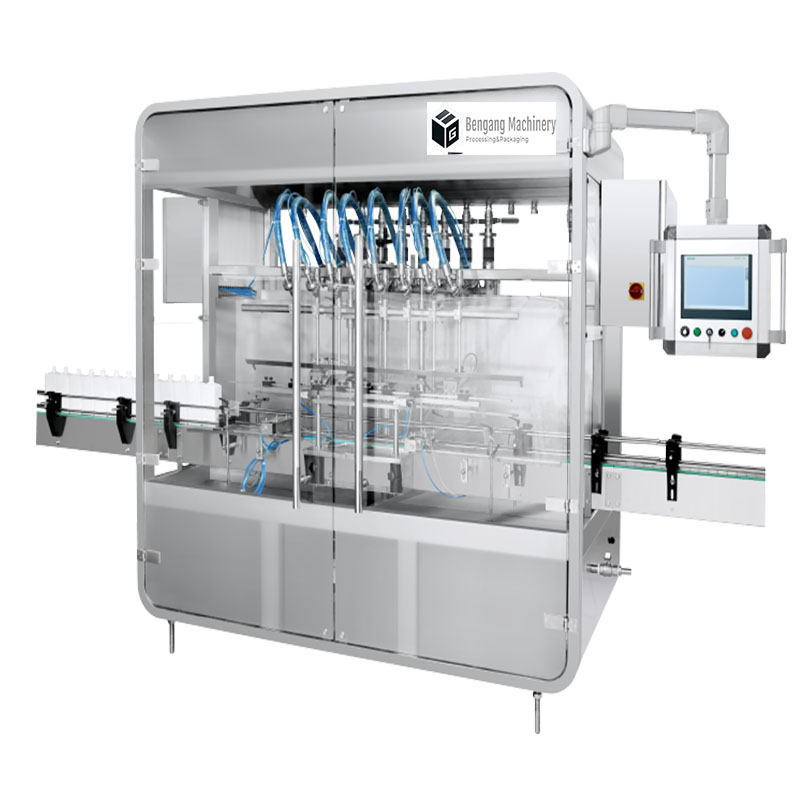
Mesin pembungkusan automatik adalah penting dalam industri kosmetik, kerana ia menyelaraskan proses pengeluaran dan meningkatkan kecekapan. Mesin-mesin ini direka bentuk untuk mengendalikan pelbagai tugas pembungkusan, daripada mengisi kepada pengedap, pelabelan, dan juga tinju. Mereka memastikan konsistensi, kelajuan dan ketepatan, yang penting untuk pengeluaran berskala besar. Berikut adalah beberapa jenis mesin pembungkusan automatik yang digunakan dalam industri kosmetik:
1. Mesin Pengisian
Mesin pengisian direka bentuk untuk mengisi bekas dengan produk kosmetik seperti krim, losyen, syampu atau serum dengan tepat. Mesin ini boleh:
- Pengisi Volumetrik: Digunakan untuk cecair dan produk separa likat.
- Pengisi Omboh: Sesuai untuk produk yang lebih likat, seperti krim dan gel.
- Pengisi Pam: Sesuai untuk cecair kelikatan nipis hingga sederhana.
2. Mesin Pengedap
Mesin pengedaps ensure that the cosmetic product’s container is tightly closed, preventing leakage and contamination. Common types of mesin pengedaps include:
- Mesin Pengedap Haba: Digunakan untuk mengelak pembungkusan plastik, biasanya digunakan dalam uncang atau kantung.
- Mesin Pengedap Cap: Skru atau tekan penutup secara automatik pada botol atau balang, memastikan pengedap yang ketat.
3. Mesin Pelabelan
Mesin pelabelan adalah penting untuk menggunakan label pada bekas kosmetik. Mereka boleh mengendalikan pelbagai tugas pelabelan, daripada menggunakan label pada botol, balang dan tiub kepada menyediakan grafik dan kod bar berkualiti tinggi. Jenis mesin pelabelan termasuk:
- Mesin Pelabelan Balut: Untuk botol dan produk silinder.
- Mesin Pelabelan Atas dan Bawah: Digunakan untuk pembungkusan segi empat tepat seperti kotak atau balang.
- Pelabelan Tersuai: Mesin juga boleh memuatkan reka bentuk label khas, memastikan logo jenama dipaparkan dengan jelas.
4. Mesin Karton
Mesin karton direka untuk meletakkan produk kosmetik ke dalam karton atau kotak. Mereka boleh disesuaikan untuk mengendalikan produk seperti botol penjagaan kulit, kit solek dan kotak minyak wangi. Mesin-mesin ini cekap dalam melipat, mengedap dan menggunakan gam pada karton. Ia boleh disepadukan dengan barisan pembungkusan lain untuk pengeluaran yang lancar.
5. Mesin Pembalut Kecilkan
Mesin pembungkus susut digunakan secara meluas dalam industri kosmetik untuk pembungkusan set berbilang produk atau memastikan pembungkusan mudah rosak. Produk diletakkan di dalam lengan filem mengecut, yang kemudiannya dipanaskan agar muat dengan ketat di sekeliling produk.
6. Mesin Palletizing
Selepas produk dibungkus, ia sedia untuk dihantar. Mesin pelet mengautomasikan proses menyusun kotak pada palet, yang membantu meningkatkan kecekapan dan mengurangkan risiko kecederaan pengendalian manual. Mesin ini sesuai untuk pengeluaran kosmetik volum tinggi.
Faedah Mesin Pembungkusan Automatik untuk Kosmetik:
- Kecekapan: Mesin automatik berfungsi dengan lebih pantas dan konsisten, membawa kepada pemprosesan yang lebih tinggi dalam operasi pembungkusan.
- Ketepatan: Mesin-mesin ini memastikan setiap langkah dalam proses, seperti pengisian, pengedap dan pelabelan, dilakukan dengan ketepatan.
- Kos-Efektif: Walaupun pelaburan awal dalam mesin automatik boleh menjadi tinggi, pengurangan kos buruh dan peningkatan dalam produktiviti menjadikannya kos efektif dari semasa ke semasa.
- Adaptation: Mesin pembungkusan moden boleh disesuaikan untuk memenuhi keperluan khusus, seperti pembungkusan saiz, bentuk dan jenis produk kosmetik yang berbeza.
- Kebersihan: Sistem automatik meminimumkan sentuhan manusia dengan produk, membantu mengekalkan tahap kebersihan yang tinggi dan mengurangkan risiko pencemaran.
Conclusion
Pembungkusan kosmetik memainkan peranan penting dalam meningkatkan daya tarikan estetik, melindungi produk, dan memastikan keselamatan dan kualiti kosmetik. Memandangkan permintaan untuk pembungkusan yang inovatif, mampan dan cekap terus berkembang, jenama mesti berada di hadapan dengan memilih bahan dan teknologi pembungkusan yang betul.
Dengan memilih bahan pembungkusan yang sesuai, seperti kadbod putih, kadbod emas atau perak, dan kertas khas, bersama-sama dengan teknik pasca pengeluaran seperti hot stamping, rawatan UV dan emboss, jenama boleh mencipta pembungkusan premium dan menarik secara visual yang menonjol di rak. Tambahan pula, penyepaduanmesin pembungkusan automatik membantu menyelaraskan proses pengeluaran, memastikan kelajuan, ketepatan dan kecekapan kos.
Dalam industri yang didorong oleh pilihan pengguna, kemampanan dan kreativiti, memahami skop penuh bahan pembungkusan kosmetik, proses dan jentera automatik adalah penting untuk membina jenama yang berjaya. Dengan keseimbangan bahan, reka bentuk dan automasi yang betul, jenama kosmetik bukan sahaja dapat melindungi dan mempersembahkan produk mereka dengan cantik tetapi juga memenuhi jangkaan pengguna yang mementingkan alam sekitar yang semakin meningkat.
 English
  Malay
Malay