Mesin pembungkusan menegak telah merevolusikan pembungkusan produk merentas industri, menawarkan kelajuan, ketepatan dan serba boleh yang belum pernah terjadi sebelumnya. Panduan muktamad ini menggabungkan pengalaman kejuruteraan pembungkusan selama 15+ tahun dengan data pasaran baharu untuk membantu anda menavigasi pemilihan mesin, penetapan harga dan pengoptimuman mesin kedap isi borang menegak (VFFS). Temui cara sistem ini boleh mengurangkan kos pembungkusan anda sebanyak 30-60% sambil menggandakan output pengeluaran.
Apakah Sebenarnya Mesin Pengedap Isi Borang Menegak?
Mesin pembungkusan menegak, sering dirujuk sebagai mesin kedap isi bentuk menegak (VFFS), adalah keajaiban kejuruteraan moden. Mesin pengedap isi borang menegak (VFFS) ialah sistem automatik yang direka bentuk untuk membungkus produk dengan membentuk beg, mengisinya dengan produk dan mengelaknya—semuanya dalam konfigurasi menegak. Mesin ini telah menjadi pilihan utama untuk pelbagai industri kerana kecekapan dan keupayaannya untuk mengendalikan pelbagai produk, termasuk pepejal, serbuk, cecair dan bahan berbutir.
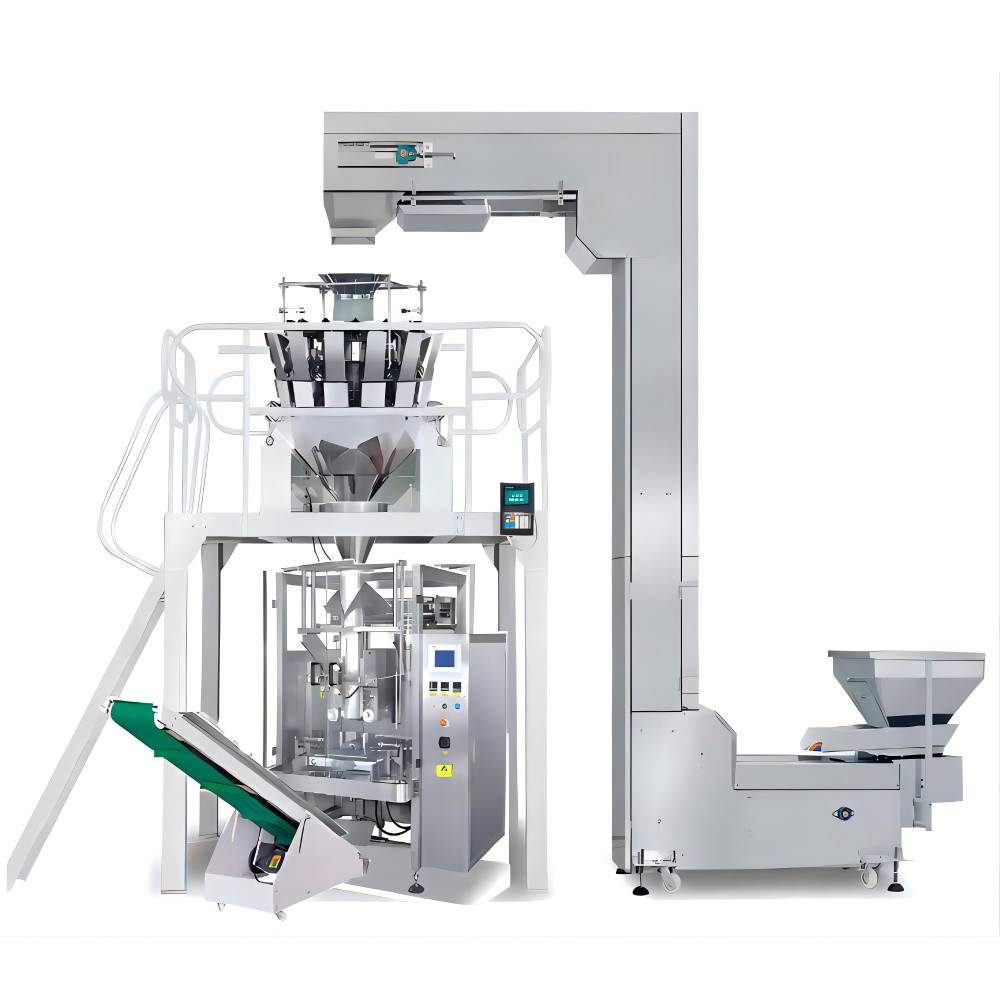
Proses ini bermula dengan membuka gulungan filem pembungkusan, yang dibentuk menjadi tiub. Tiub kemudiannya diisi dengan produk sebelum dimeterai secara mendatar di kedua-dua hujungnya. Bergantung pada keupayaan mesin, ia boleh mencapai kelajuan 40-200 beg seminit. Apabila anda membuat keputusan untuk membeli mesin Vffs, anda boleh mendapat 3 faedah di bawah:
- 99.9% keutuhan meterai
- ±0.5% ketepatan berat
- Peningkatan produktiviti: 3x lebih pantas daripada sistem separa automatik
Bagaimanakah Mesin Pembungkusan Menegak Berfungsi?
Pada dasarnya, mesin pembungkusan menegak mengambil gulungan rata filem pembungkusan, membentuknya menjadi bentuk beg, mengisinya dengan produk anda (sama ada kerepek, gula-gula, kopi atau perkakasan), dan kemudian menutup beg itu – semuanya dalam gerakan menegak yang berterusan. Ia seperti superhero pembungkusan!
Tiga Langkah Utama dalam Mesin Pembungkusan Menegak:
- Membentuk: Filem itu ditarik dari gulungan dan dibentuk menjadi tiub menggunakan kolar pembentuk.
- Pengisian: Produk diukur dengan tepat dan dimasukkan ke dalam tiub.
- pengedap: Rahang yang dipanaskan membuat pengedap mendatar untuk mengamankan bungkusan, yang kemudiannya dipotong ke dalam beg individu.
Mesin menegak sesuai untuk membungkus makanan ringan, farmaseutikal, serbuk dan banyak lagi. Kecekapan mereka dalam menghasilkan volum tinggi pakej berkualiti menjadikannya popular dalam barisan pengeluaran di seluruh dunia.
Pecahan Harga Mesin Menegak: Apa yang Anda Dapatkan untuk Wang Anda?
Mesin kedap isi bentuk menegak tersedia pada pelbagai titik harga, dengan setiap peringkat menawarkan ciri, keupayaan dan kelajuan pengeluaran yang berbeza. Berikut ialah perbandingan harga dan perkara yang anda boleh jangkakan untuk pelaburan.
| Komponen | Model Asas ($18k) | Model Julat Pertengahan ($45k) | Model Premium ($85k+) |
|---|---|---|---|
| Bahan Bingkai | Keluli lembut | Keluli tahan karat | SS gred pembedahan |
| Sistem Pemacu | Pneumatik | Servo hibrid | Servo penuh |
| Jenis Meterai | Haba tunggal | Suhu berganda | Impulse + Cool |
| Antara Muka Kawalan | PLC asas | Skrin sentuh HMI | didayakan IoT |
| Masa Pertukaran | 45 minit | 15 minit | <5 minit |
| Penggunaan Tenaga | 5kW/jam | 3.2kW/jam | 2.1kW/jam |
Anda boleh mendapatkan cara harga mesin mencerminkan kerumitan dan kecanggihan teknologi peralatan dari jadual. Contohnya, model premium menawarkan teknologi pengedap termaju, kecekapan tenaga dan masa pertukaran yang lebih pantas—sesuai untuk persekitaran pengeluaran volum tinggi.
Sampel: salah satu pengeluar makanan snek yang membeli mesin kelas pertengahan kami menyaksikan kos buruh pembungkusan mereka turun daripada $8,200/bulan kepada $1,900/bulan, memulihkan pelaburan $52k dalam tempoh 7 bulan.
Bagaimanakah Pembungkusan Menegak Berbanding dengan Pembungkusan Mendatar?
Apabila ia datang untuk memilih sistem pembungkusan, memahami perbezaan antara mesin menegak dan mendatar adalah penting. Walaupun kedua-dua sistem mempunyai kelebihan mereka, mesin VFFS sering mengatasi rakan sejawatan mendatar dalam senario tertentu.
Perbezaan Utama Antara Sistem Menegak dan Mendatar:
- Orientasi: Mesin HFFS beroperasi secara mendatar, manakala mesin VFFS beroperasi secara menegak.
- Jenis Produk: Mesin HFFS biasanya digunakan untuk membungkus produk pepejal seperti kuki, keropok dan kuih-muih, manakala mesin VFFS lebih serba boleh dan boleh mengendalikan rangkaian produk yang lebih luas, termasuk bahan berbutir, cecair dan serbuk.
- Speed: Mesin HFFS biasanya beroperasi pada kelajuan yang lebih tinggi daripada mesin VFFS.
- jejak kaki: Mesin VFFS biasanya mempunyai jejak yang lebih kecil daripada mesin HFFS, menjadikannya pilihan yang baik untuk kemudahan dengan ruang terhad.
- Kos: Mesin VFFS biasanya lebih murah daripada mesin HFFS.
Memilih antara mesin HFFS dan VFFS bergantung pada keperluan pembungkusan khusus anda dan jenis produk. Jika anda membungkus produk pepejal pada kelajuan tinggi, HFFS mungkin pilihan yang lebih baik. Jika anda memerlukan mesin serba boleh yang boleh mengendalikan pelbagai produk dan mempunyai ruang yang terhad, VFFS mungkin pilihan yang tepat.
Apakah Ciri Utama Mesin Pengedap Isi Borang Menegak?
Memahami ciri utama mesin pengedap isi borang menegak membantu dalam membuat keputusan yang tepat untuk barisan pengeluaran anda. Elemen paling penting untuk dipertimbangkan ialah tahap automasi, teknologi pengedap dan kecekapan tenaga.
Ciri-ciri Penting Mesin VFFS:
- Automasi: Model mewah datang dengan automasi dipacu servo, mengurangkan keperluan untuk pelarasan manual dan membolehkan penukaran lebih pantas.
- Sistem Pengedap: Sesetengah mesin VFFS menawarkan sistem pengedap termaju seperti pengedap impuls dan penyejukan, yang memastikan integriti pengedap yang lebih tinggi dan mengurangkan pembaziran.
- Kecekapan Tenaga: Cari mesin yang menggunakan teknologi penjimatan tenaga, seperti motor servo, untuk mengurangkan kos operasi keseluruhan.
| Spesifikasi | Nilai |
|---|---|
| Kelajuan Pengeluaran | 50-120 PPM |
| Julat Saiz Beg | 50-300mm (lebar), 50-400mm (panjang) |
| Julat Lebar Filem | 150-600mm |
| Jenis Pengedap | Heat Sealer |
| Penggunaan Kuasa | 3-5 kW |
| Penggunaan Udara | 0.6-0.8 MPa |
Spesifikasi ini akan membolehkan anda membandingkan mesin yang berbeza dan menentukan yang mana satu paling sesuai untuk keperluan khusus anda.
Industri manakah yang paling banyak mendapat manfaat daripada Penyelesaian Pembungkusan Menegak?
Top adopters according to PMMI’s 2023 report:
Makanan & Minuman (38% bahagian pasaran)
- Biji kopi
- Makanan haiwan peliharaan
- Minuman serbuk
Pharmaceutical (27%)
- Kit peranti perubatan
- Jalur tablet
- beg larutan IV
Bahan kimia (19%)
- Baja
- garam kolam
- Serbuk industri
Aplikasi baru muncul:
- Produk CBD yang memerlukan pembilasan nitrogen
- Kit makanan dengan pembungkusan suasana yang diubah suai
Cara Memilih Mesin Pembungkus Menegak Yang Tepat untuk Industri Anda
Setiap industri mempunyai set keperluan sendiri apabila ia berkaitan dengan pembungkusan. Sama ada anda menggunakan makanan, farmaseutikal atau bahan kimia, memilih mesin pembungkusan menegak yang betul adalah penting untuk memastikan mesin memenuhi keperluan operasi anda.
Pertimbangan Khusus Industri:
- Industri Makanan: Mesin mesti mampu mengendalikan filem gred makanan, memastikan kebersihan dan pematuhan piawaian kesihatan.
- Farmaseutikal: Mesin perlu memenuhi peraturan yang ketat seperti pensijilan ISO 14644-1 Kelas 8 untuk memastikan integriti produk.
- Bahan kimia: Mesin VFFS dalam sektor ini perlu mengendalikan produk seperti baja atau serbuk industri, yang mungkin mempunyai keperluan pembungkusan yang unik.
Memilih pengeluar mesin VFFS yang betul ialah keputusan penting yang boleh memberi kesan ketara kepada operasi pembungkusan anda. Dengan begitu banyak pilihan yang tersedia, adalah penting untuk melakukan penyelidikan anda dan memilih rakan kongsi yang selaras dengan keperluan dan matlamat khusus anda.
Pengalaman dan Kepakaran: Cari pengilang dengan rekod prestasi yang terbukti dalam mereka bentuk dan membina mesin VFFS yang boleh dipercayai. Semak pengalaman industri mereka, testimoni pelanggan dan kajian kes untuk mengetahui keupayaan mereka.
Julat Produk: Pilih pengilang yang menawarkan rangkaian model mesin VFFS untuk memenuhi keperluan jenis produk dan pembungkusan khusus anda.
Pilihan Penyesuaian: Jika anda mempunyai keperluan pembungkusan yang unik, cari pengeluar yang menawarkan pilihan penyesuaian untuk menyesuaikan mesin dengan keperluan khusus anda.
Perkhidmatan dan Sokongan: Pastikan pengilang menyediakan perkhidmatan dan sokongan yang komprehensif, termasuk pemasangan, latihan, penyelenggaraan dan penyelesaian masalah.
Harga dan Nilai: While price is an important consideration, don’t make your decision solely on cost. Focus on finding a manufacturer that offers the best value for your money, considering factors like quality, reliability, and support.
Don’t be afraid untuk bertanya soalan dan meminta rujukan. Bercakap dengan pelanggan lain boleh memberikan pandangan yang berharga tentang prestasi pengilang dan perkhidmatan pelanggan.
Apakah Kos Tersembunyi yang Perlu Anda Perhatikan Semasa Membeli Mesin VFFS?
Walaupun kos awal mesin VFFS merupakan faktor penting, adalah penting untuk mempertimbangkan kos tersembunyi yang mungkin timbul sepanjang kitaran hayat mesin. Kos ini boleh ditambah dengan cepat dan memberi kesan kepada pendapatan anda.
Kos Tersembunyi untuk Dipertimbangkan:
- Penyelenggaraan dan Penggantian Alat Ganti: Dari masa ke masa, bahagian seperti rahang pengedap dan penggelek filem mungkin memerlukan penggantian, menambah kos penyelenggaraan yang berterusan.
- Kos Tenaga: Mesin dengan penggunaan tenaga yang lebih tinggi boleh meningkatkan bil utiliti, terutamanya dalam persekitaran output tinggi.
- Latihan: Latihan yang betul untuk pengendali adalah penting untuk memastikan prestasi mesin yang optimum, tetapi ini boleh disertai dengan kos tambahan.
Merancang kos ini lebih awal boleh membantu anda mengelakkan kejutan dan memastikan proses pembungkusan anda berjalan lancar.
Pengilang Mesin Pengedap Isi Borang Menegak: Siapakah yang Perlu Anda Beli?
Memilih pengeluar yang betul adalah penting untuk memastikan kualiti, kebolehpercayaan dan sokongan mesin VFFS anda. Berikut ialah perbezaan antara OEM dan pembekal tempatan.
OEM lwn Pembekal Tempatan:
- OEM (Pengilang Peralatan Asal): Menawarkan teknologi canggih dan sokongan jangka panjang tetapi selalunya lebih mahal.
- Pembekal Tempatan: Berikan harga yang kompetitif dan sokongan yang berpotensi lebih pantas tetapi mungkin menawarkan teknologi yang kurang canggih dan ciri yang lebih sedikit.
Akhirnya, pilihan antara OEM dan pembekal tempatan bergantung pada keperluan khusus anda, termasuk belanjawan, sokongan dan keperluan teknologi.
Apakah Trend Terkini dalam Mesin Pembungkusan Menegak?
Industri pembungkusan terus berkembang, dengan trend baharu memacu inovasi. Berikut ialah beberapa trend utama yang membentuk masa depan mesin VFFS.
- Penyelenggaraan Ramalan: Dengan penderia IoT, penyelenggaraan ramalan membantu pengeluar meminimumkan masa henti dengan mengesan isu sebelum ia menjadi masalah besar.
- Sistem Penglihatan Dikuasakan AI: Sistem AI kini boleh mengenal pasti kecacatan pengedap dan memastikan kualiti produk tanpa pemeriksaan manual.
- Pembungkusan Mampan: Apabila kebimbangan alam sekitar meningkat, lebih banyak pengeluar melabur dalam filem terbiodegradasi dan pilihan pembungkusan mesra alam.
Trend ini menunjukkan bahawa masa depan pembungkusan menegak akan didorong oleh teknologi pintar yang meningkatkan kecekapan dan kemampanan.
Bacaan Selanjutnya:



 English
  Malay
Malay