The liquid doesn't fall — it's pumped into the film pocket.
Vertical form-fill-seal (VFFS) machine for non-granulated liquids with a changeable funnel: the doser is mounted directly above the film tube, the product is precisely pumped into the newly formed pouch, and the seal must close before a single drop lands in the crimp zone. This technology produces 5–50 ml sachets for restaurants and 200 ml–1 L pillow bags for supermarkets — a single line for chili sauce, syrup, coconut milk, oil, and cleaning agents.
This is a supplement to two existing articles: Automatic liquid filling machine to fill bottles and jars, and Coconut milk packaging For the coconut product side, this article focuses on the sachet machine itself.
5-station liquid VFFS machine anatomy
- Dispenser on the tube — volumetric piston (most common, ±1%) or flow meter for high-value products; nozzle selection logic the same as for bottle filling.
- Film pocket formed — film retracted, back seam sealed, lower jaw closes beneath the pocket.
- Contents down — Dose is pumped in through the central tube; viscous product flows slowly, thin liquid quickly — fill time is included in the cycle.
- Seal on top — close the jaws over the sachet and cut; this seal must be drip-free, as liquid between the film layers will compromise the weld.
- Output — sachet falls into the dispenser, directly into the box or round tin.
Speed: one lane 30–60 sachets/min (viscous at the lower end); multi-lane machines with 4–8 lanes reach 120–240 sachets/min — standard for sauce and syrup contracts.
Product and doser: the combination that determines the rate of spoilage.
| Product | Dose | Attention |
|---|---|---|
| Water, vinegar, thin syrup | gravity/piston | Foam on fast-fill — nozzle-dive or two-stage |
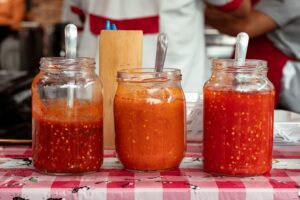
| Chili sauce, tomato sauce | Big-bore piston | pulp requires large valves and hoses — [tomato sauce packaging machine](https://lintyco.my/mesin-pembungkus-sos-tomato/) |
| Thick coconut milk | piston + temperature | Hot 75-85°C requires a temperature-rated seal. |
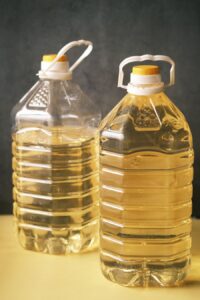
| Cooking oil | flow meter/piston | ±0.51 TP3T value per 1 L bag |
| Honey | piston | likat — hot nozzle option — [honey packaging machine](https://lintyco.my/mesin-pembungkus-madu/) |
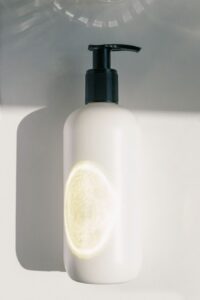
| Cleaning supplies, shampoo | piston | Separate from food; SS304 is sufficient. |
Movies and seals: three decisions before buying
- Film structureClear, low-cost PE for cleaning products; laminated PET/PE for oily foods; full barrier for aroma and moisture. Liquids permeate bare PE faster than air — diffusion testing on actual products before committing.
- Seal width 8-12 mm Liquids require a wider seal than granules; micro-droplets in the cut zone are the number-one cause of leaks and they aren't visible until the bag is stored upright on the shelf.
- Temperature-valued jaw If the product is hot: a standard clamp at 80 °C in coconut milk loses control within a month.
Single lane or multiple lanes?
Restaurant volume (10–30 ml size, 5,000–20,000 sachets per day) is sufficient with a single lane. Café and hotel contracts require four lanes or more; at that point the infeed doser and film system make the machine twice as complex—and the price reflects it. The small-scale pulp sachet is described in Mini sachet bag packaging machine; thin bar format, respectively stick pack packaging machine.
Hygiene: CIP determines actual productivity
Cleaning the food fluid line at every stop—manually disassembling hoses and pistons every day kills productivity. A clean-in-place system (hoses self-flushing, tool-free disassembly of the dosing head) pays for itself within weeks. The food zone and the cleaning-agent zone do not share lines, even if they use the same technology.
The liquid sachet machine sits in the family. liquid packaging solutions; General specs of the large family in automatic packaging machine.
Frequently Asked Questions (FAQ)
Can one machine make 10 ml sachets and 500 ml bags?
J: Technically yes, with different jaw sets and dosers—but the actual speed falls into the most difficult format. Most manufacturers separate the small sachet line and the large bag line.
Is a sachet standing up okay?
J: You can use thicker film and K-shaped seals—but that's a premium option that increases the cost per unit; flat sachets remain the standard for small sizes.
How often should the hose and seal be replaced?
J: Product hoses last 6–12 months depending on chemistry; jaw seals last longer. Keep critical spare parts at home — halting the line to wait two weeks for a hose costs more than the hose itself.
Can a food processor build up cleaning residue after repeated washings?
J: It's possible from a technological standpoint, but industry practice is to segregate—cross-contamination and halal/haram product controls require separate lines. The wash zone is for equipment only, not products.
Related pages
Automatic liquid filling machine | Coconut milk packaging | Tomato sauce packaging machine | Stick pack packaging machine
Specify the product, bag size, and bag target per minute. Get a quote, specifications and delivery timeframe.


 English
 Malay